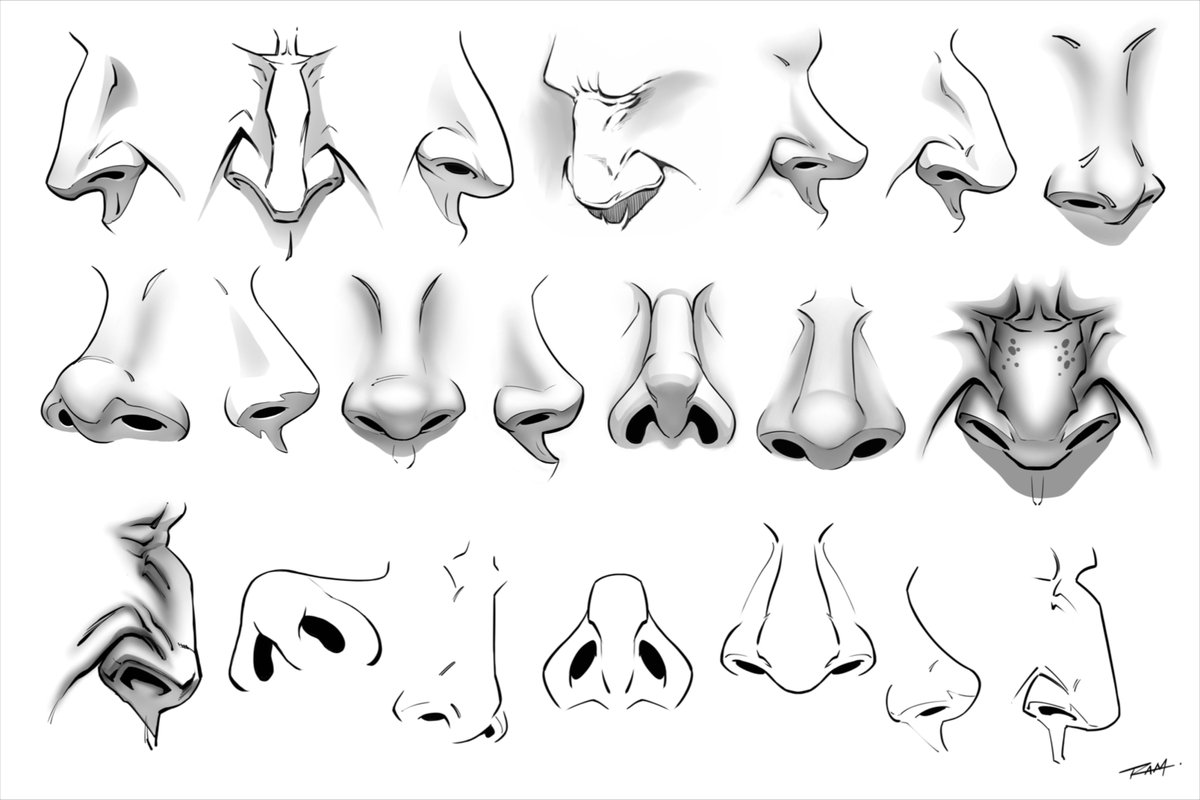
Ever wondered how a simple facial feature like the nose can tell you so much about a cartoon character, its animation style, and even the era it came from? From a tiny dot to an extravagant honker, the design of cartoon noses isn't arbitrary; it’s a masterclass in visual storytelling, reflecting technological advancements, cultural shifts, and evolving artistic sensibilities. Understanding how cartoon noses evolve across animation styles and eras offers a unique lens through which to appreciate the rich history and future of this dynamic art form.
Let's dive into the fascinating world of animated anatomy, starting with a quick overview of what we'll uncover.
At a Glance: The Journey of the Cartoon Nose
- Early Animation (1910s-1920s): Simple, bold lines for immediate recognition; often symbolic of traits like greed or naiveté.
- Golden Age (1930s-1950s): Became tools for physical comedy and exaggerated expression; defined character silhouettes and supported fluid motion.
- Television Era (1950s-1970s): Simplified and smaller due to budget constraints and faster production for smaller screens.
- Anime's Rise (1960s-Present): Highly stylized, from tiny dots for cute characters to sharp, angular lines for dramatic effect; emphasized character identity.
- Digital Revolution (1990s-Present): Volumetric and three-dimensional, requiring detailed modeling and rigging for believability across various angles.
- Modern & Indie Animation: Diverse aesthetic choices, often subverting traditional tropes, blending styles, and embracing unique character designs.
- More Than Just a Feature: Noses serve as crucial shorthand for personality, cultural context, and comedic timing, evolving with every technological and artistic leap.
The Birth of the Honker: Early Animation's Simple Charms (1910s-1920s)
In the nascent days of animation, when pioneers like Winsor McCay brought Gertie the Dinosaur to life in 1914, and Walt Disney introduced Mickey Mouse in Steamboat Willie in 1928, cartoon noses were, by necessity, quite straightforward. Animators worked with black-and-white, bold lines, and minimal shading, drawing thousands of cells by hand.
During this period, the nose’s primary function was immediate identification and conveying basic personality traits. Think of the elongated, often slightly bulbous noses of early caricatures – they were visual shorthand. A long, pointy nose might instantly signal a snooty aristocrat or a tricky villain, tapping into established traditions of visual caricature. These simple, yet effective, designs allowed characters to read clearly, even on grainy, flickering films. Characters from Fleischer Studios, like Betty Boop, exemplified this era's fluid lines and direct approach to character features, where noses were integrated smoothly into the overall facial structure, serving clarity above all else. This foundational era set the stage, proving that even minimal lines could breathe life into a character's face.
The Nose Knows Comedy: The Golden Age of Exaggeration (1930s-1950s)
As animation entered its glorious the Golden Age of Animation, studios like Disney, Warner Bros., and MGM transformed noses from mere identifiers into dynamic tools for expression and slapstick. With technological advancements like Technicolor and the multiplane camera, animators gained unprecedented control over detail, depth, and color.
For Disney, in films like Snow White and the Seven Dwarfs (1937), noses contributed to a more naturalistic, charming aesthetic. They were often small, cute, and rounded, fitting into the studio's pursuit of wholesome, detailed character designs that prioritized emotional expression and realism.
However, it was at Warner Bros. where the cartoon nose truly came into its comedic prime. Animators like Tex Avery and Chuck Jones elevated the nose into a flexible, rubbery instrument of physical comedy. Bugs Bunny's sleek, often almost invisible nose contributed to his cool, unflappable demeanor, but other characters’ noses became props. They could stretch, contort, snap back, or even serve as levers for elaborate gags. Think of a character's nose elongating from fright, or wiggling uncontrollably in anticipation. This exploitation of the nose's physicality was crucial for defining character silhouettes, adding another layer to the zany slapstick that defined Looney Tunes. The symbolic long nose, in particular, transcended its early roles. As we explore how the long nose cartoon character evolved, you'll see how it moved from mere symbolism to a versatile prop, capable of eliciting laughs through its sheer physical absurdity, establishing its place as an iconic feature for comedic effect.
Shrinking Noses: The Television Era’s Practicality (1950s-1970s)
The advent of television dramatically shifted animation production. With tighter budgets, smaller screens, and the demand for rapid output for weekly series, animation styles became notably more simplified. This era gave birth to "limited animation," a cost-efficient technique that reduced the number of frames drawn per second and streamlined character designs.
Noses, naturally, were among the first features to undergo this simplification. They often became smaller, flatter, or even reduced to simple dots or subtle indentations. Think of The Flintstones or The Jetsons – character designs were iconic, but facial features were pared down. This wasn't a decline in artistry, but a practical adaptation. Simple noses were easier for "in-betweeners" (the artists who draw frames between key poses) to replicate quickly and consistently. They also helped preserve the overall character silhouette on smaller, less detailed television screens, ensuring characters remained recognizable even with less visual information. This necessity-driven simplification proved that even with reduced complexity, noses still played a vital role in defining character.
The Global Nose: Anime’s Stylized Approach (1960s-Present)
While Western animation navigated the demands of television, Japanese anime began its ascent, eventually becoming a global phenomenon. Anime introduced a distinct approach to character design, characterized by detailed art, complex storylines, and a strong emphasis on character-driven drama.
In anime, the evolution of noses took a fascinating, highly stylized trajectory.
- Early Anime (e.g., Astro Boy, Speed Racer): Noses were often small and triangular, part of a broader style influenced by Disney but with unique Japanese aesthetics. They were designed to not distract from the expressive eyes, which became the focal point for emotion.
- The 1980s and 1990s: As anime gained complexity, so did its character designs. Noses could range from almost invisible dots (especially for cute or younger characters) to sharper, more angular lines for dramatic or mature characters. Consider the almost imperceptible noses in many shoujo (girls') anime, designed to enhance the softness and innocence of the characters.
- Modern Anime (e.g., One Piece): Some anime proudly feature exaggerated noses, often for comedic effect or to highlight a unique personality. Usopp from One Piece is a prime example; his ridiculously long nose is a central part of his character identity and provides a constant source of visual humor, drawing inspiration from both Western caricature and Eastern iconography like the Tengu legends.
Anime's influence on Western cartoons from the 1990s-2000s, seen in shows like Avatar: The Last Airbender, led to hybrid styles where elements like dynamic action and mature thematic content blended. This often meant a wider range of nose styles, from simplified to subtly detailed, reflecting this cross-cultural artistic exchange.
The Volumetric Nose: The Digital Revolution and CGI (1990s-Present)
The digital revolution ushered in Computer-Generated Imagery (CGI), fundamentally transforming animation production. With CGI, particularly from studios like Pixar and DreamWorks, cartoon noses ceased to be flat drawings and became volumetric, three-dimensional elements. This shift brought unprecedented detail, fluidity, and realism.
Suddenly, a nose wasn't just a line; it had depth, shadow, and texture.
- Modeling and Rigging: Animators had to meticulously model the nose, considering its shape from all angles. It then required complex rigging – a digital skeletal system – to ensure it could deform and move realistically with facial expressions.
- Shading and Lighting: Lighting engineers would then shade the nose, adding highlights and shadows that react to light sources, creating a sense of realism or stylization.
- Secondary Motion: For longer or more prominent noses, animators could even add "secondary motion," subtle jiggles or swings that occur naturally as a character moves, further enhancing believability. Think of the subtle squish and stretch of a character's nose as they make a big expression, lending incredible nuance to mastering animated facial expressions.
This allowed for a vast spectrum of nose designs, from the subtly rounded and expressive noses of Pixar characters to the more stylized, yet fully 3D, noses seen in films like Klaus, which masterfully combined hand-drawn aesthetics with digital tools. Hybrid production techniques, merging traditional hand-drawn art with digital tools (The Princess and the Frog being a notable example), further diversified how noses could be rendered, allowing artists to pick the best approach for their desired look and feel.
Modern Noses: Aesthetic Choices and Subversion (2000s-Present)
Today's animation landscape is a vibrant mosaic of styles, driven by independent animators, streaming platforms, and a global exchange of ideas. This era has seen cartoon noses become incredibly diverse, often playing with established tropes or embracing unique aesthetic choices.
- Stylized Extremes: You’ll find characters with noses so tiny they're almost nonexistent, contributing to a soft, approachable aesthetic, or long, angular noses that serve as bold statements of eccentricity or distinct character design. Modern indie artists often use these extremes to differentiate their work.
- Subverting Expectations: Contemporary creators frequently subvert the traditional symbolism of the long nose. It might be used for a sincere, empathetic protagonist rather than a trickster, or deliberately shrunken to soften a character’s face, playing with audience expectations. This can signal personality, era, or cultural influence, sometimes even offering a knowing wink to animation history.
- Cultural Fusion: The increased global collaboration and easy distribution via social media and streaming platforms have led to a fascinating fusion of styles. You might see Western characters with anime-influenced noses, or vice versa, showcasing the ongoing evolution of the evolution of cartoon art styles across continents. This leads to a rich tapestry of designs where a nose isn't just a nose; it's a statement, a joke, a symbol, or a carefully crafted piece of art that defines a character.
Why Noses Matter: More Than Just a Feature
Beyond aesthetics and technological shifts, the cartoon nose holds significant weight in visual storytelling.
- Character Identity: A character's nose is often one of its most recognizable features. Think of Homer Simpson's tiny, curved schnoz, or Popeye's prominent proboscis. These aren't just details; they're integral to who the character is.
- Personality Shorthand: As in early animation, the nose still serves as a quick visual cue for personality. A small, button nose might suggest innocence or cuteness, while a sharp, pointed nose could imply cunning or aggression.
- Emotional Amplification: While eyes are often considered the windows to the soul, the nose (especially in conjunction with the mouth) plays a crucial role in amplifying expressions. A wrinkled nose for disgust, a flared nostril for anger – these subtle movements add depth to a character's emotional range.
- Cultural Context: Noses in cartoons can also reflect cultural influences, from traditional folklore (like the Japanese Tengu with their long noses) to specific comedic traditions. This allows animators to connect with specific audiences on a deeper, more resonant level.
- Stylistic Signature: Ultimately, the way noses are drawn is part of a studio's or an individual animator's stylistic signature. It contributes to the overall "look and feel" of a piece, helping to define its genre and tone.
The Future of the Animated Nose: Beyond the Canvas
As animation continues to push boundaries, so too will the humble cartoon nose. Emerging technologies like Virtual Reality (VR), Augmented Reality (AR), and Artificial Intelligence (AI) are poised to open up new dimensions for character design.
Imagine VR experiences where character noses are fully interactive, responding to a viewer's gaze or proximity. Or AR applications where animated noses can be superimposed onto real-world objects, blending digital and physical realms. AI could even assist in generating dynamic nose deformations based on complex emotional algorithms, allowing for unprecedented subtlety and expressiveness.
The future will likely see a continued balance between traditional aesthetics and futuristic visuals. We'll witness even greater global collaboration, leading to a fusion of styles that challenge our perceptions of what a cartoon nose can be. From a simple dot to a highly detailed, interactive 3D model, the journey of the cartoon nose is a testament to the boundless creativity and ingenuity of animators worldwide. It’s a small feature that tells a big story, evolving constantly to reflect our changing world and the enduring magic of animation.
For those ready to dive even deeper into the intricacies of character design and animation, remember that every detail, no matter how small, plays a part in the grand narrative. Exploring All about cartoon noses is just one step on your journey to appreciating this incredible art form.